




Dr. Scott Weinert
Office: 319 Physical Science I
Phone: (405) 744-6543
charles.s.weinert@okstate.edu
Latest News
-
Vanessa Successfully Defends Her PhD Thesis!
On July 10th 2025, Vanessa Fortney sucessfully defended her PhD thesis. She came to OSU with very...
-
Laura delivers a poster at the 2025 CSC in Ottawa
Laura Levescy presented her research at the poster session at the 2025 Canadian Society for...
-
Vanessa presents her reserach at the CSC 2025 in Ottawa
Vanessa presents her research at CSC 2025 in Ottawa Vanessa gave an oral presenation of her latest...
-
Weinert group attends the Spring 2025 MICA Meeting
Vanessa, Laura, and Scott attended the Spring 2025 Midsouth Inorganic Chemists Association (MICA)...
-
Vannessa presents her latest results at CSC Winnipeg
Vanessa Fortney gave a talk during the General Inorganic Session at the Canadian Soicety of...
Research
- Details
- Created: Thursday, 04 February 2016 10:28
OLIGOGERMANES
Research in the Weinert group is primarily focused on the synthesis and characterization of oligogermanes, which are the germanium analogues of hydrocarbons that contain germanium – germanium single bonds. The compounds are of interest due to their inherent σ-delocalization, where the electrons in the highest occupied molecular orbitals of these compounds are not localized between two individual atoms but rather are typically delocalized across the entire germanium – germanium framework. This occurs when the germanium atoms are disposed in a trans-coplanar orientation that then allows the overlap of the diffuse 4sp3 orbitals to occur (Figure 1).
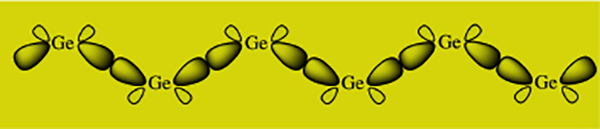
FIGURE 1
The construction of these molecules is not trivial and previously reported synthetic methods were replete with complications that did not allow for a detailed study of these systems. We developed the hydrogermolysis reaction in 2006 for the synthesis of these molecules, and this serves as a useful tool for the construction of a wide variety of systems (Scheme 1). Using this method we have prepared numerous new oligogermanes having a variety of chain lengths and substituent patterns, and this has included linear, branched, and cyclic systems.
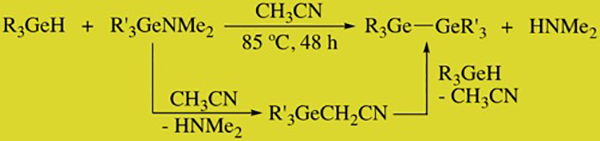
SCHEME 1
The ultimate goal of this work is to prepare molecules that have useful optical, electronic, or conductive properties. Such physical attributes have been seen in polygermanes, which are systems with long chains and a dispersion of molecular weights, or germanium nanomaterials. We are attempting to prepare fully characterized small molecules that exhibt such properties. To this end, we reported the hexagermane Pri3Ge(GePh2)GePri3 and have studied its properties in detail (Scheme 2, Figure 2). This molecule is thermochromic and also luminescent in both solution and in the solid state, and we postulate that the luminescence is due to a conformational change in the solid state upon excitation. There is an intense blue emission in the soid state at 440 nm at 80 K when the molecule is excited at 300 nm, and this can be visually observed as well (Figure 3).
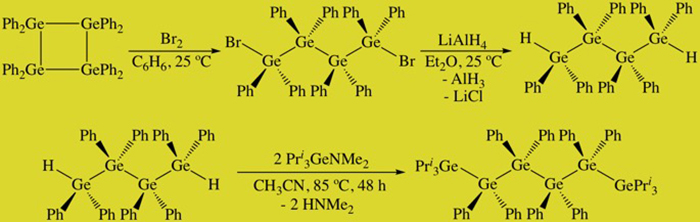
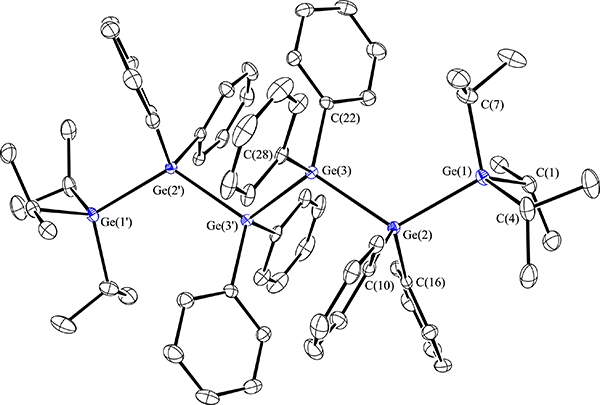
FIGURE 2
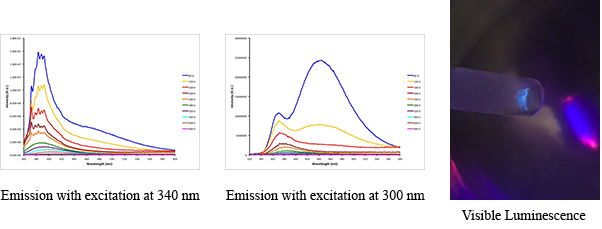
FIGURE 3
GERMYLAMINES AS AMIDATION AGENTS
Recently, we have explored the use of germylamines, in particular Ph3GeNMe2, as versatile reagents for the conversion of acid fluorides to amides. This is an important area of research since the peptide linkage is highly prevalent in biochemistry, protein chemistry, and pharmaceutical development and new methods to generate this moiety are always of interest. We have found that Ph3GeNMe2 can be used to convert an extensive array of aromatic acid fluorides having substituents in the ortho-, meta-, or para- positions as well as those having multiple substituents (Figure 4) We have modeled the transition state for this process and determined that it proceeds via a sigma bond metathesis pathway with a very low activation energy (Figure 5). Thus, this process is complete at room temperature within 2 hours and conversions from the acid fluoride to the amide proceed completely. The isolated yields of the amides are also high (greater than 90 %). Two other advantages of this synthetic method are that the acid fluorides are more stable towards moisture than their corresponding acid chlorides and the Ph3GeF byproduct can be isolated and converted back to the Ph3GeNMe2 starting material, making this method cost-effective. A list of successfully synthesized amides is shown in Figure 6. We are continuing to investigate the scope and limitations of this process, including the amidation of larger organic acid fluorides and the use of other germylamines having different substituents on the nitrogen atom.
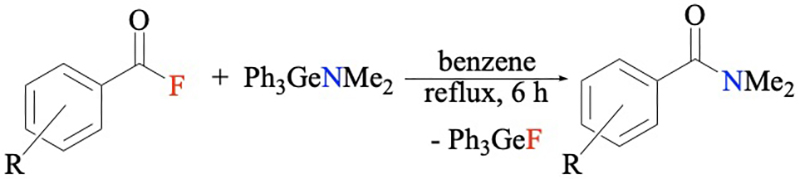
FIGURE 4
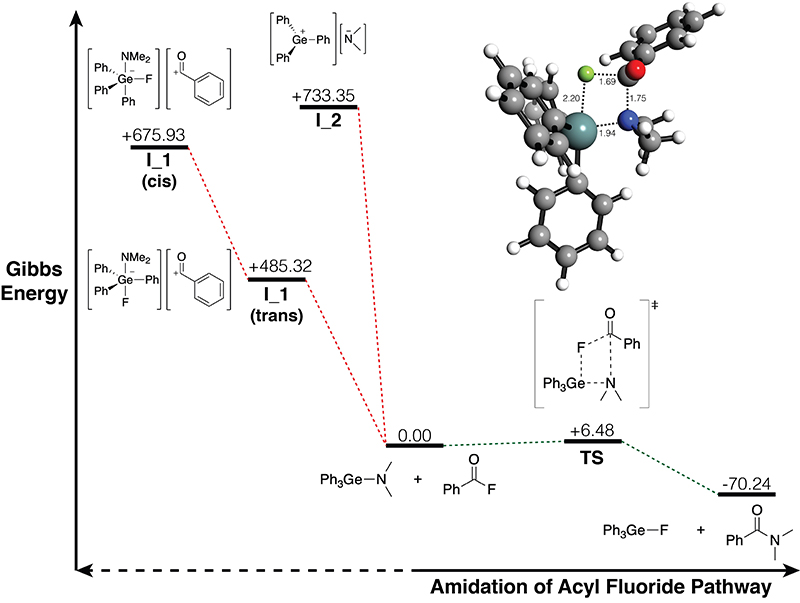
FIGURE 5
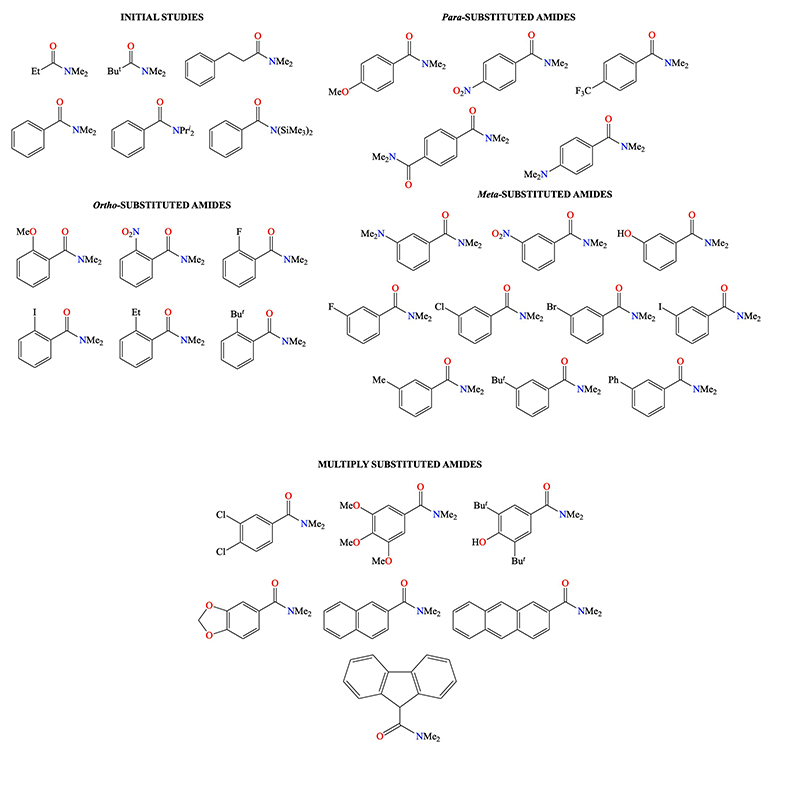
FIGURE 6
Somewhat surprisingly, structurally characterized germylamines are quite rare. Prior to our beginning our investigations, only two structurally characterized germylamines have been reported, Mes3GeNH2 and (ButCC)3GeNEt2. They typical method for the syntheses of these materials is the salt metathesis reaction shown in Figure 7. During the course of our investigations, we obtained the X-ray crystal structures of both Ph3GeNMe2 and also the highly sterically encumbered germylamine Ph3GeN(SiMe3)2 (Figure 8). We are currently endeavoring to prepare and structurally characterize numerous other germylamines, but their preparation has been problematic. Consequently, we are in the process of developing new synthetic techniques to prepare these molecules.

Figure 7
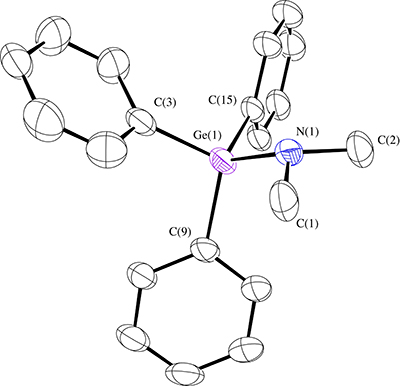
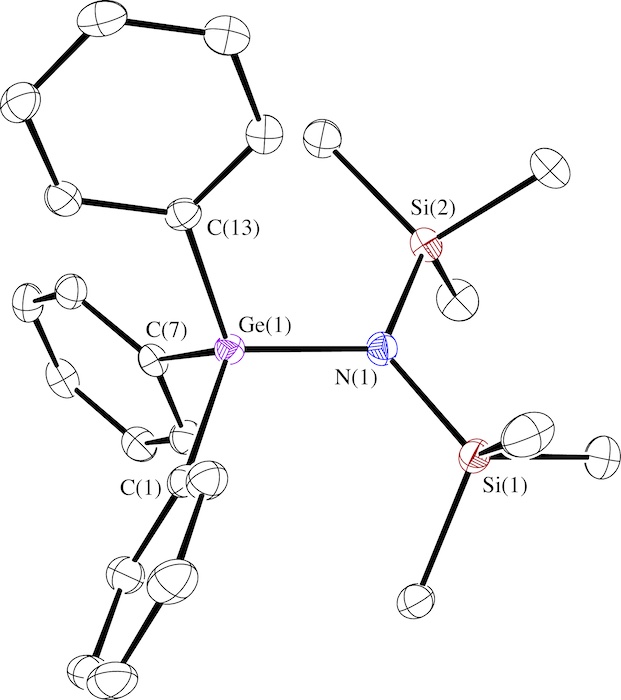
Figure 8
Teaching
- Details
- Created: Thursday, 04 February 2016 10:31
Publications
- Details
- Created: Thursday, 04 February 2016 10:26
2026
50. Vanessa A. Fortney, Ardalan Hayatifar, and Charles S. Weinert*. “Probing the Decomposition Pathway of the Branched Germylium Ion [(Ph3Ge)3Ge]+ using 19F NMR Spectroscopy and Density Functional Theory Calculations.” Can. J. Chem. 2026, 104, 403-409.
2025
49. Vanessa A. Fortney, Laura M. Levescy, Julia K. Murphy, Milan Gembicky, and Charles S. Weinert*. “Synthesis, Structure, Frontier Orbitals, and Reactivity of Ph3GeN(SiMe3)2: Rare Crystal Structure of a Germylamine.” Chem. Asian J. 2025, 20, e202401274 (5pp).
48. Thad R. Stancil, Vanessa A. Fortney, Julia K. Murphy, Milan Gembicky, Arnold L. Rheingold, and Charles S. Weinert.* “Desulfurization of Isothiocyanates by a Divalent Germanium Amide.” Dalton Trans. 2025, 54, 70-73.
2023
47. Vanessa A. Fortney, Julia K. Murphy, Thad R. Stancil, Milan Gembicky, Arnold L. Rheingold, and Charles S, Weinert*. “Exploring the Versatility of the Amidation of Aryl Acid Fluorides using the Germylamines R3GeNMe2.” Chem. Asian J. 2023, 18, e202300788 (11pp). INVITED CONTRIBUTION.
46. Alexander Shumaker and Charles S. Weinert*. “Absorbance and Emission Studies in Solution and the Solid State and Band Gap Determination of Pri3Ge(GePh2)4GePri3.” Main Group Chem. 2023, 22, 239-250.
45. Charles S. Weinert. “Oligo- and Polygermanes.” In Organogermanium Chemistry: Theory, Experiment, and Applications; Vladimir Ya. Lee, Ed.; John Wiley & Sons, 2023, Vol. 2, pp. 788-837. INVITED BOOK CHAPTER.
2022
44. Miguel A. Léal, Arnold L. Rheingold, and Charles S. Weinert*. “A Facile Route to Germanium(IV) Binaphthoxide Complexes: Crystal Structure of a Chiral Resolved Germanium(IV) Binaphthoxide.” Mendeleev Commun. 2022, 33, 19-21. INVITED CONTRIBUTION.
2021
43. Ardalan Hayatifar, Emily A. Elifritz, Molly B. Bloom, Kaitlyn M. Pixley, Christopher J. Fennell, and Charles S. Weinert*. “Direct Amidation of Acid Fluorides Using Germanium Amides.” Dalton Trans. 2021, 50, 4490-4493.
2020
42. Charles S. Weinert. “Germylamines.” Science of Synthesis Knowledge Updates 2020, 3, 131-140. INVITED CONTRIBUTION.
41. Miguel A. Léal, Kevin Begic, John Campbell, Nolan Kirkman, Dawson Myers, Aaron C. Schrick, Arnold L. Rheingold, and Charles S. Weinert*. “Preparation, Absorption Spectra, and Electrochemistry of the Trigermanes R3GeGePh2GeR3 (R3 = But, Me, PhMe3, Bun3) and Tetragermanes R3GeGePh2GePh2GeR3 (R3 = Et3, Bun3).” J. Organomet. Chem. 2020, 925, 121467.
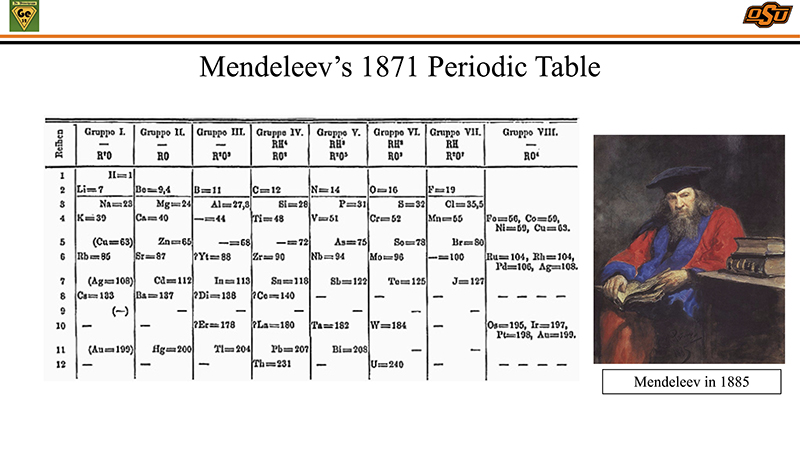
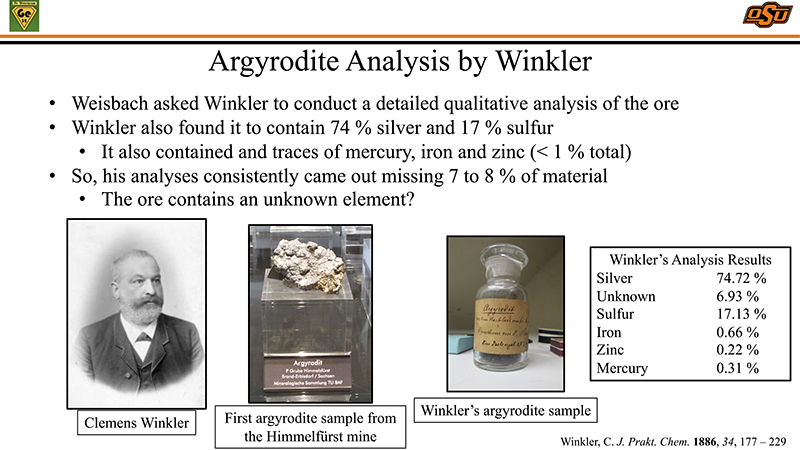
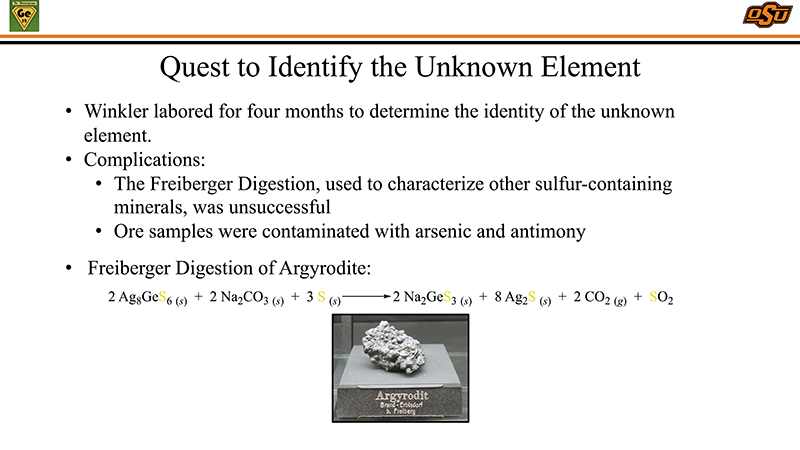
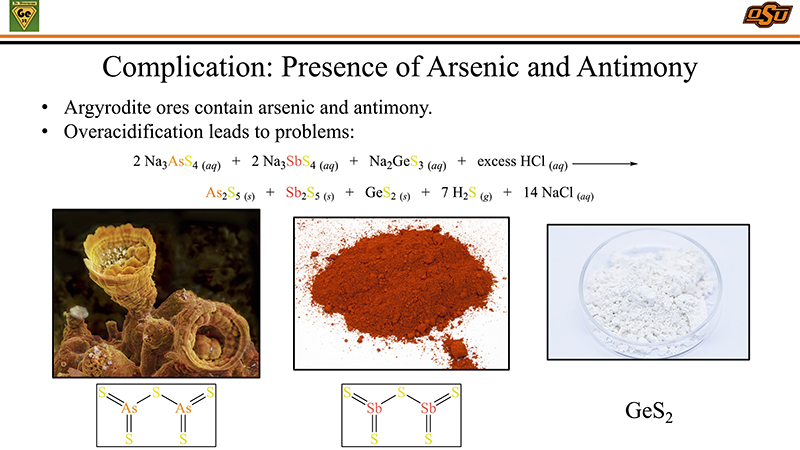
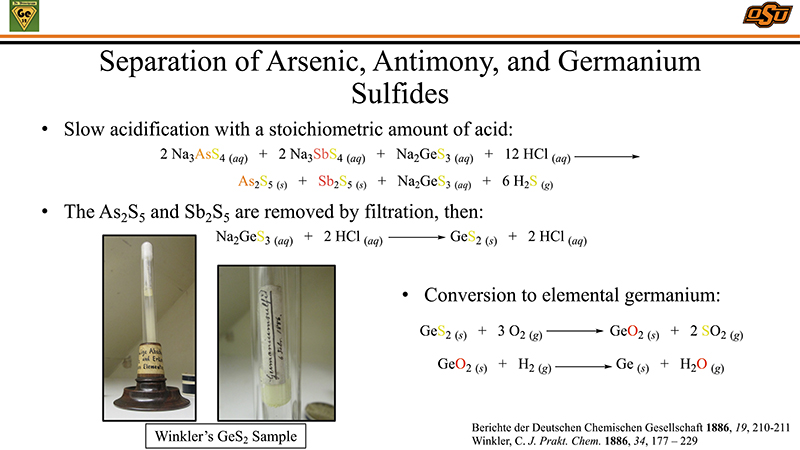
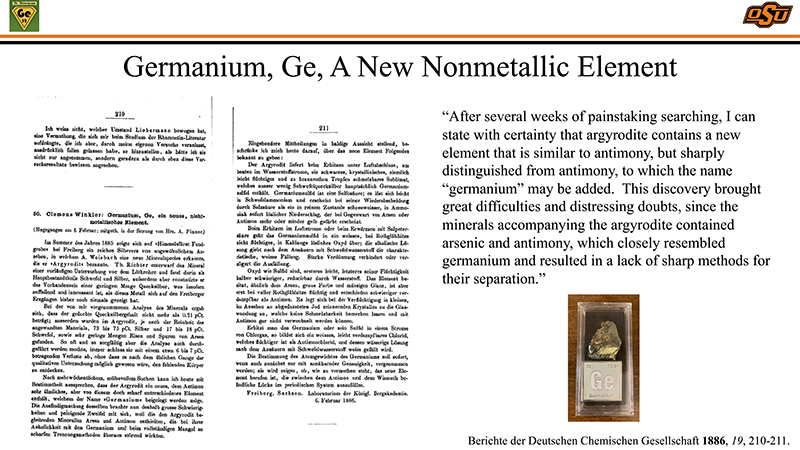
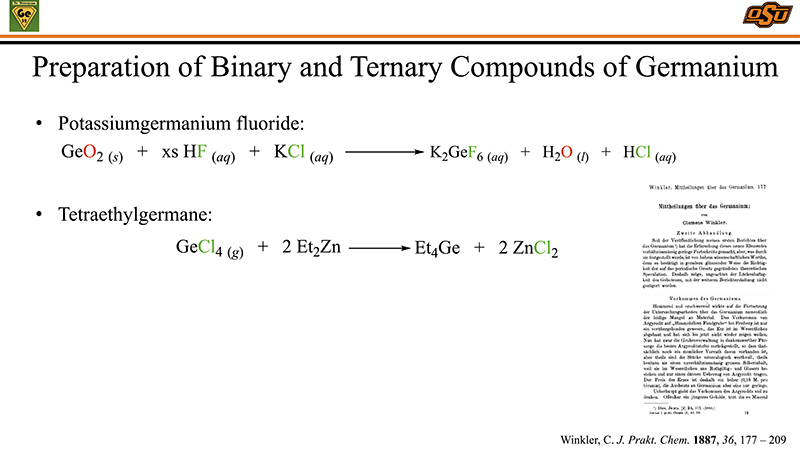
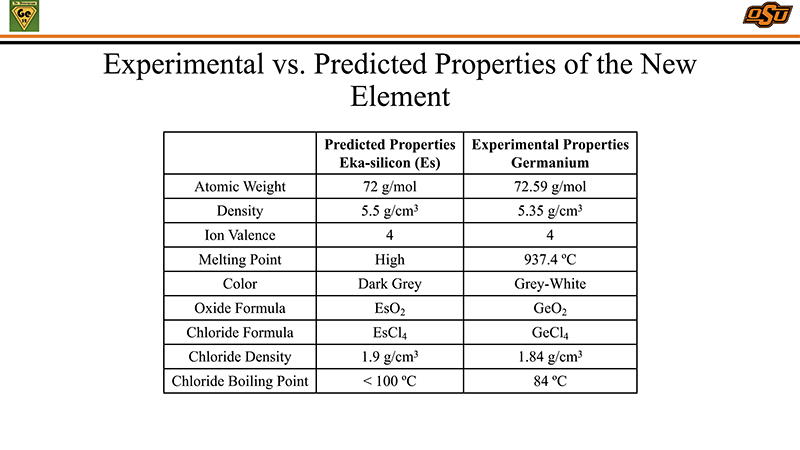
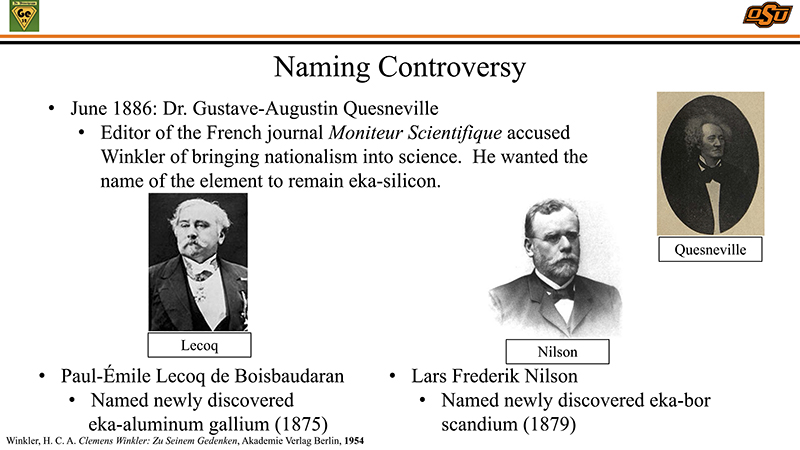
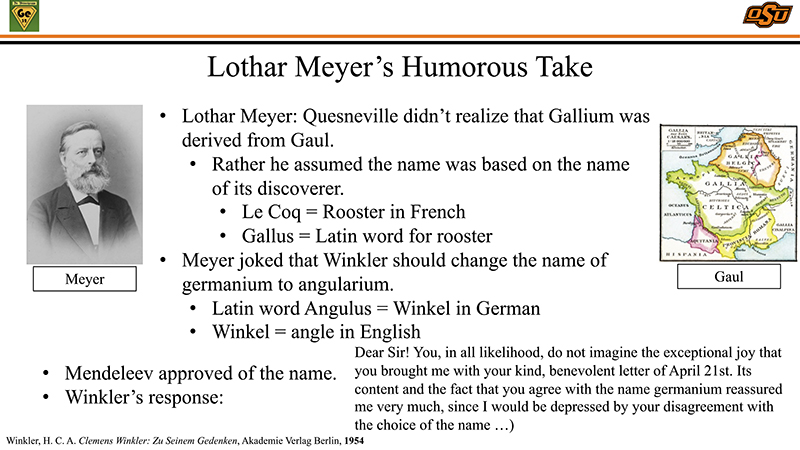
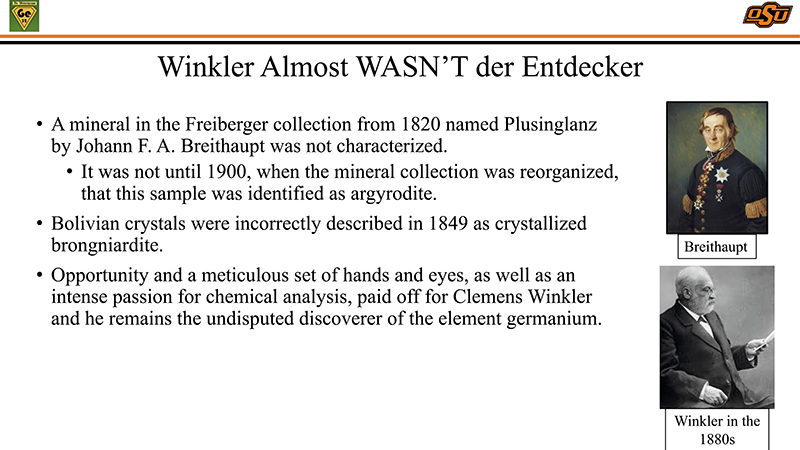
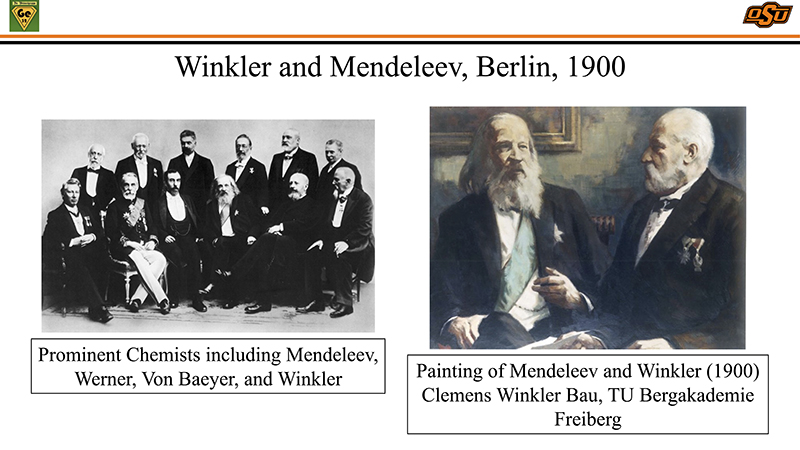
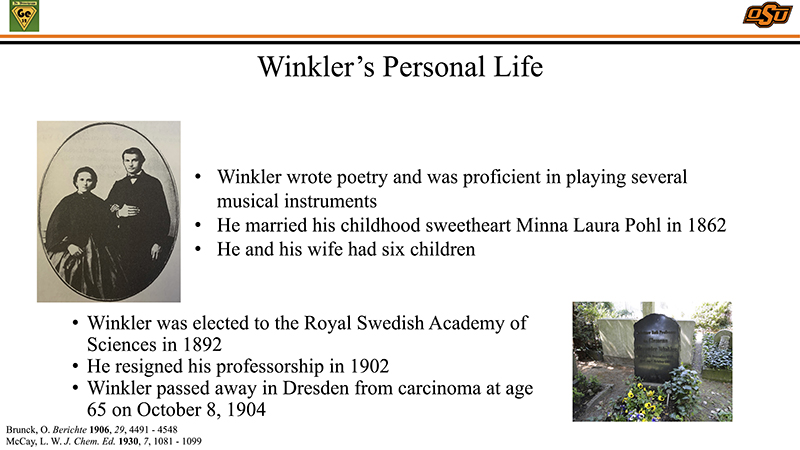
40. Charles S. Weinert. “Die Chemie Ist Schwierig: Winkler and the Discovery of Germanium.” Bull. Hist. Chem. 2020, 45, 8-15. INVITED CONTRIBUTION.
2019
39. Ardalan Hayatifar, Alejandro Borrego, David Bosek, Matthew Czarnecki, Gabriel Derocher, Adam Kuplicki, Erik Lytle, Jonas Padilla, Charles Paroly, Gillian Tubay, Jackson Vyletel and Charles S. Weinert*. “Transition Metal-Free Hydrodefluorination of Acid Fluorides and Organofluorines by Ph3GeH Promoted by [Ph3C][B(C6F5)4].” Chem. Commun. 2019, 55, 10852-10855.
2018
38. Ardalan Hayatifar, F. Alexander Shumaker, Sangeetha P. Komanduri, Sydney A. Hallenbeck, Arnold L. Rheingold, and Charles S. Weinert*. “Synthesis of the Elusive Branched Fluoro-Oligogermane (Ph3Ge)3GeF: A Structural. Spectroscopic, Electrochemical, and Computational Study.” Organometallics 2018, 37, 1852-1859.
2017
37. Sangeetha P. Komanduri, Aaron C. Schrick, Christopher J. A. Daley, Arnold L. Rheingold, and Charles S. Weinert*. "Synthesis, Structure, and Decomposition of the Digermane Ph3GeGePh2H." Main Group Chem. 2017, 16, 217-225
36. Sangeetha P. Komanduri, F. Alexander Shumaker, Sydney A. Hallenbeck, Cody J. Knight, Claude H. Yoder, Beth A. Buckwalter, Craig P. Dufresne, Erico J. Fernandez, Christopher A. Kaffel, Ryan E. Nazareno, Marshall Neu, Geoffrey Reeves, James T. Rivard, Lance J. Shackelford, and Charles S. Weinert*. "Structure/property relationships in branched oligogermanes. Preparation of (Me3Ge)3GePh, (Me2ButGe)3GePh, and (Me2PhGe)3GePh and investigation of their properties by spectroscopic, spectrometric and electrochemical methods." J. Organomet. Chem. 2017, 848, 104-113.
2016
35. Sangeetha P. Komanduri, F. Alexander Shumaker, Kimberly D. Roewe, Melanie Wolf, Frank Uhlig, Curtis E. Moore, Arnold L. Rheingold, and Charles S. Weinert*. "A Series of Isopropyl-Substituted Oligogermanes Pri3Ge(GePh2)nGePri3 (n = 0 - 3) Featuring a Luminescent and Dichroic Pentagermane Pri3Ge(GePh2)3GePri3." Organometallics 2016, 35, 3240-3247. Link
34. Sangeetha P. Komanduri, Aaron C. Schrick, Christa L. Feasley, Craig P. Dufresne, and Charles S. Weinert*. “Photodecomposition of the Heteroleptic Trigermane Bun3GeGePh2GeBun3 and Identification of the Photoproducts by High Resolution Accurate Mass Mass Spectrometry.” Eur. J. Inorg. Chem. 2016, 3196-3203.
2015
33. Charles S. Weinert. “Germaium: Organometallic Chemistry.” In Encyclopedia of Inorganic and Bioinorganic Chemistry, ed. R. A. Scott, John Wiley: Chichester, UK, 2015, DOI: 10.1002/9781119951438.eibc0075.pub3 (18 pp).
2014
32. Kimberly D. Roewe, James A. Golen, Arnold L. Rheingold, and Charles S. Weinert*. “Synthesis, Structure and Properties of the Hexagermane Pri3Ge(GePh2)4GePri3.” Can. J. Chem. 2014, 92, 533-541. INVITED ARTICLE.
2013
31. Kimberly D. Roewe, Arnold L. Rheingold, and Charles S. Weinert*. “A Luminesent and Dichroic Hexagermane.” Chem. Commun. 2013, 49, 8380-8382. Cited in “News of the Week”, Chemical and Engineering News, September 16, 2013.
30. Aaron C. Schrick and Charles S. Weinert*. “Oligogermanes as Molecular Precursors for Germanium(0) Nanoparticles. Size Control and Size Dependent Fluorescence.” Mater. Res. Bull. 2013, 48, 4390-4394.
29. Erin K. Schrick, Trevor J. Forget, Kimberly D. Roewe, Aaron C. Schrick, Curtis E. Moore, James A. Golen, Arnold L. Rheingold, Nicholas F. Materer, and Charles S. Weinert*. “Substituent Effects in Digermanes: Electrochemical, Theoretical, and Structural Investigations.” Organometallics 2013, 32, 2245-2256.
2012
28. Charles S. Weinert. “73Ge Nuclear Magnetic Resonance Spectroscopy of Germanium Compounds.” ISRN Spectroscopy 2012, Article ID 718050, 18 pp. INVITED REVIEW.
27. Christian R. Samanamu, Monika L. Amadoruge, Aaron C. Schrick, Chao Chen, James A. Golen, Arnold L. Rheingold, Nicholas F. Materer, and Charles S. Weinert*. “Synthetic, Structural, and Physical Investigations of the Large Linear and Branched Oligogermanes Ph3GeGePh2GePh2GePh2H, Ge5Ph12, and (Ph3Ge)4Ge.” Organometallics 2012, 31, 4374-4385.
26. Aaron C. Schrick, Chao Chen, Arnold L. Rheingold, and Charles S. Weinert*. “Synthesis of Ge[N(SiMe2Ph)2]2 and Crystal Structures of the Benzil Adducts Ph2C2O2Ge[N(SiMe2Ph)2]2 and Ph2C2O2Ge[N(SiMe3)2]2.” Main Group Chem. 2012, 11, 3-11.
25. Christian R. Samanamu, Nicholas F. Materer, and Charles S. Weinert*. “Absorption, Electrochemical, Theoretical, and 73Ge NMR Spectral Characterization of the Germanium Neo-Pentane Analogue (Me3Ge)4Ge.” J. Organomet. Chem. 2012, 698, 62-65.
2011
24. Charles S. Weinert. “Synthetic, Structural, and Physical Aspects of Organo-Oligogermanes.” Comments Inorg. Chem. 2011, 32, 55-87.
23. Christian R. Samanamu, Arnold L. Rheingold, and Charles S. Weinert*. “Reactivity of α-Germyl Nitriles with Acetonitrile: Synthesis, Structures, and Generation of Ph3Ge[NHC(CH3)CHCN] and 2,6-dimethyl-4-(triphenylgermylamino)pyrimidine from Ph3GeCH2CN.” J. Organomet. Chem. 2011, 696, 3721-3726.
22. Christian R. Samanamu, Courtney R. Anderson, James A. Golen, Curtis E. Moore, Arnold L. Rheingold, and Charles S. Weinert*. “Syntheses and Structural Analysis of the Sterically Encumbered Germanes (o-ButC6H4)3GeX (X = Br, H, Cl, OH), (o-ButC6H4)2GeBr2, and Mes2GeH2: Distortions Arising from the Presence of an ortho-tertbutyl Substituent.” J. Organomet. Chem. 2011, 696, 2993-2999.
21. Christian R. Samanamu, Monika L. Amadoruge, and Charles S. Weinert*. “Synthesis, Structures, and Properties of Branched Oligogermanes.” Phosphorus, Sulfur, and Silicon (Proceedings of the 13th International Conference on the Coordination and Organometallic Chemistry of Germanium, Tin, and Lead) 2011, 186, 1389-1395.
20. Aaron C. Schrick, Arnold L. Rheingold, and Charles S. Weinert*. “The First Germanium-Minor Calixarene Complex.” Dalton Trans. 2011, 40, 6629-6631.
19. Christian R. Samanamu, Monika L. Amadoruge, James A. Golen, Curtis E. Moore, Arnold L. Rheingold, Nicholas F. Materer, and Charles S. Weinert*. “Syntheses, Structures and Electronic Properties of the Branched Oligogermanes (Ph3Ge)3GeH and (Ph3Ge)3GeX (X = Cl, Br, I).” Organometallics 2011, 30, 1046-1058.
2010
18. Anthony E. Wetherby, Jr., Christian R. Samanamu, Aaron C. Schrick, Antonio DiPasquale, James A. Golen, Arnold L. Rheingold, and Charles S. Weinert*. “Synthesis and Structures of Aryloxo- and Binaphthoxogermanium(IV) Alkyl Iodide Complexes.” Inorg. Chim. Acta 2010, 364, 89-95.
17. Monika L. Amadoruge, Erin K. Short, Curtis Moore, Arnold L. Rheingold, and Charles S. Weinert*. “Structural , Spectral, and Electrochemical Investigations of para-Tolyl-substituted Oligogermanes.” J. Organomet. Chem. 2010, 695, 1813-1823.
2009
16. Monika L. Amadoruge, Arnold L. Rheingold, and Charles S. Weinert*. “2,2,3,3,5,5,6,6-Octa(para-methylphenyl)-1,4-dioxa-2,3,5,6- tetragermacyclohexane Bis(dichloromethane) solvate.” Acta Cryst. 2009, E65, o2186.
15. Rebecca A. Green, Curtis Moore, Arnold L. Rheingold, and Charles S. Weinert*. “Formation and Structures of Germanium(II) Aryloxo/Oxo Clusters.” Inorg. Chem. 2009, 48, 7510-7512.
14. Monika L. Amadoruge, Claude H. Yoder, Julia Hope Conneywerdy, Katie Heroux, Arnold L. Rheingold, and Charles S. Weinert*. “73Ge NMR Spectral Investigations of Singly Bonded Oligogermanes.” Organometallics 2009, 28, 3067-3073.
13. Rebecca A. Green, Arnold L. Rheingold, and Charles S. Weinert*. “Synthesis of the Germanium(II) Calixarene {p-But8calix[8]arene}Ge4 and its Reaction with Fe2(CO)9: Generation of the Germanium(II)/Iron(0) Complex {p-But8calix[8]arene}Ge4[Fe(CO)4]2.” Inorg. Chim. Acta 2009, 362, 3159-3164.
12. Charles S. Weinert. “Syntheses, Structures, and Properties of Linear and Branched Oligogermanes.” Dalton Trans. 2009, 1691-1699. INVITED PERSPECTIVE REVIEW.
2008
11. Monika L. Amadoruge and Charles S. Weinert*. “Singly Bonded Catenated Germanes: Eighty Years of Progress.” Chem. Rev. 2008, 108, 4253-4294. INVITED REVIEW.
10. Monika L. Amadoruge, James R. Gardinier*, and Charles S. Weinert*. “Substituent Effects in Linear Organogermanium Catenates.” Organometallics 2008, 27, 3753-3760.
9. Monika L. Amadoruge, James A. Golen, Arnold L. Rheingold, and Charles S. Weinert*. “Preparation, Structure, and Reactivity of Discrete Branched Oligogermanes.” Organometallics 2008, 27, 1979-1984.
Cited in “Science & Technology Concentrates”, Chemical and Engineering News, May 5, 2008.
8. Anthony E. Wetherby, Jr., Arnold L. Rheingold, Christa L. Feasley, and Charles S. Weinert*. “Synthesis and Crystal Structure of a Germanium(II) Calix[6]arene containing Unusual Diamidosilyl Ether Groups.” Polyhedron 2008, 27, 1841-1847.
7. Monika L. Amadoruge, Antonio G. DiPasquale, Arnold L. Rheingold, and Charles S. Weinert*. “Hydrogermolysis Reactions Involving the α-Germylated Nitriles R3GeCH2CN (R = Ph, Pri, But) and Germanium Amides R3GeNMe2 (R = Pri, But) with Ph3GeH: Substituent Dependent Reactivity and Crystal Structures of Pri3GeGePh3 and But3Ge[NHC(CH3)CHCN].” J. Organomet. Chem. 2008, 693, 1771-1778.
6. Anthony E. Wetherby, Jr., Lindy. R. Goeller, Antonio G. DiPasquale, Arnold L. Rheingold, and Charles S. Weinert*. “Metal-Dependent Reactions of Bulky Metal(II) Amides M[N(SiMe3)2]2 with 3,3’-Disubstituted Binaphthols (HO)2C20H10(SiR3)2-3,3’: Selective Conversion of One Equivalent –OH Group to a Silyl Ether –OSiMe3.” Inorg. Chem. 2008, 47, 2162-2170.
2007
5. Charles S. Weinert. “An NMR (1H and 77Se) Investigation of the Reaction of Ge[N(SiMe3)2]2 with Mesitylselenol: Formation of (MesSe)4Ge.” Main Group Met. Chem. 2007, 30, 93-100.
4. Anthony E. Wetherby, Jr., Lindy R. Goeller, Antonio G. DiPasquale, Arnold L. Rheingold, and Charles S. Weinert*. “Synthesis and Structures of an Unusual Germanium(II) Calix[4]arene Complex and the First Germanium(II) Calix[8]arene Complex and Their Reactivity with Diiron Nonacarbonyl.” Inorg. Chem. 2007, 46, 7579-7586.
3. Anthony E. Wetherby, Jr., Stacy D. Benson, and Charles S. Weinert*. “Reaction of Bis(bis(trimethylsilyl)amido)mercury(II) with 3,3’-Disubstituted Binaphthols: Cyclization via an Intramolecular Electrophilic Aromatic Substitution Reaction.” Inorg. Chim. Acta 2007, 360, 1977-1986.
2006
2. Charles S. Weinert. “Germanium Organometallics.” In Comprehensive Organometallic Chemistry III; Crabtree, R. H., Mingos, D. M. P., Eds.; Elsevier: London, 2006; Vol. 3, Chapter 13, pp. 699 - 808. INVITED BOOK CHAPTER
1. Esla Subashi, Arnold L. Rheingold, and Charles S. Weinert*. “Preparation of Oligogermanes via the Hydrogermolysis Reaction.” Organometallics 2006, 25, 3211-3219.
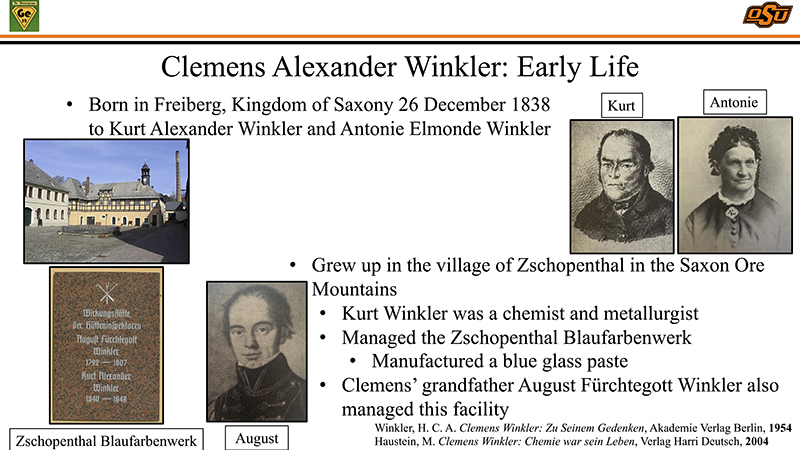
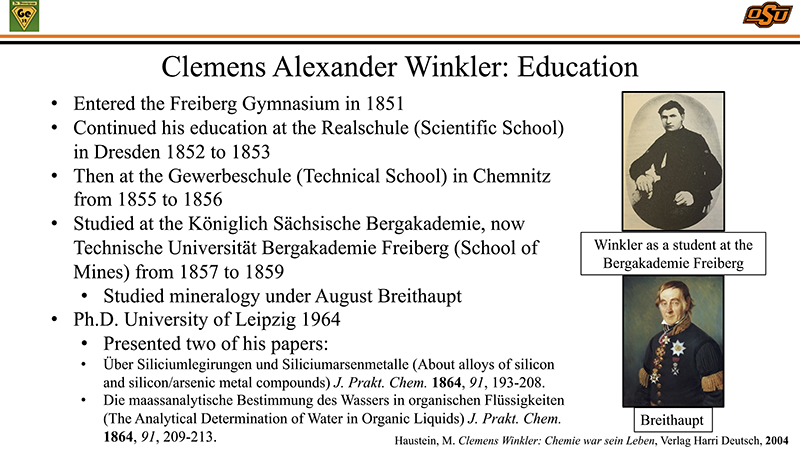
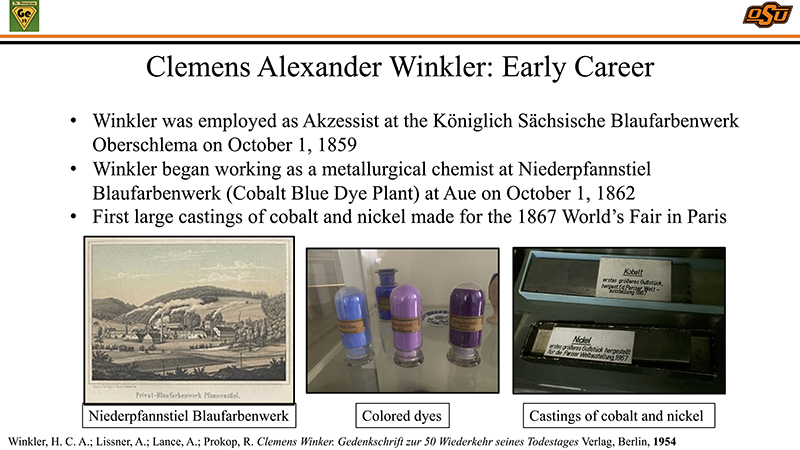
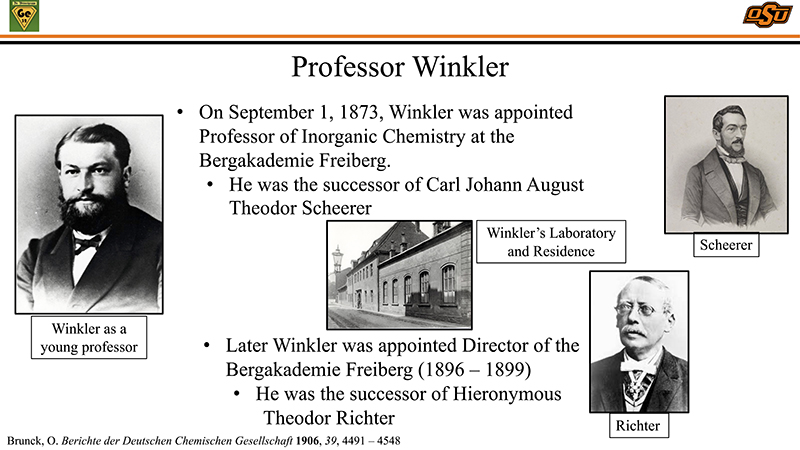
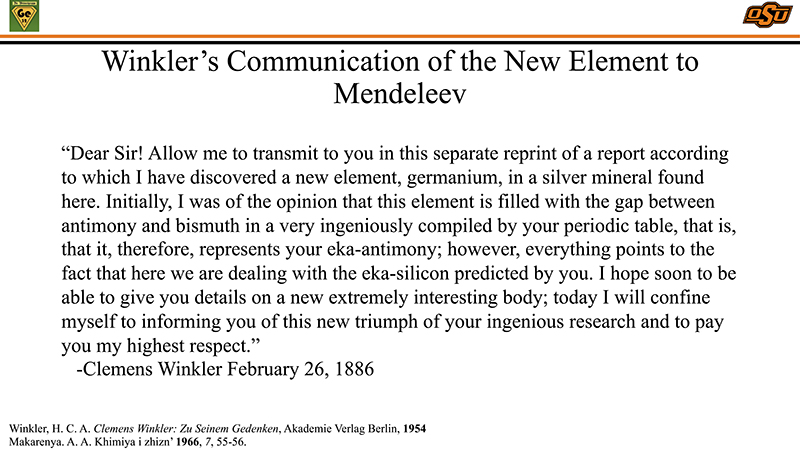
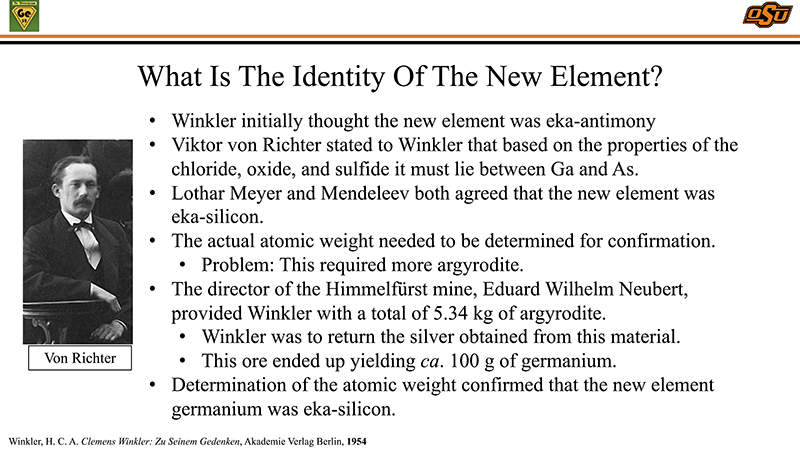
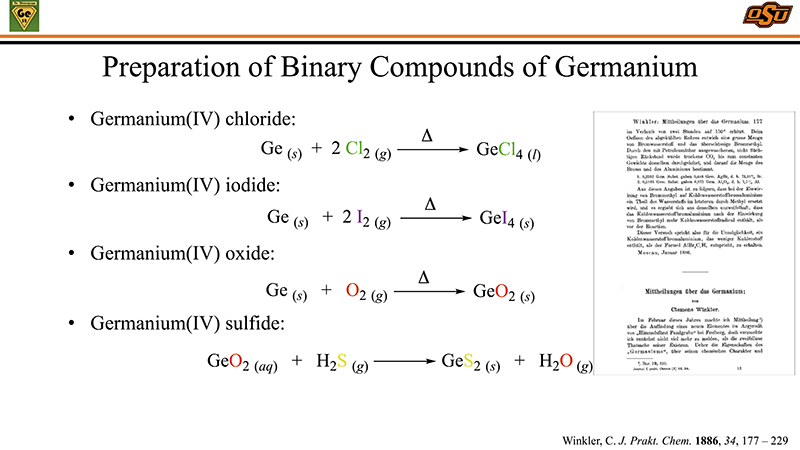
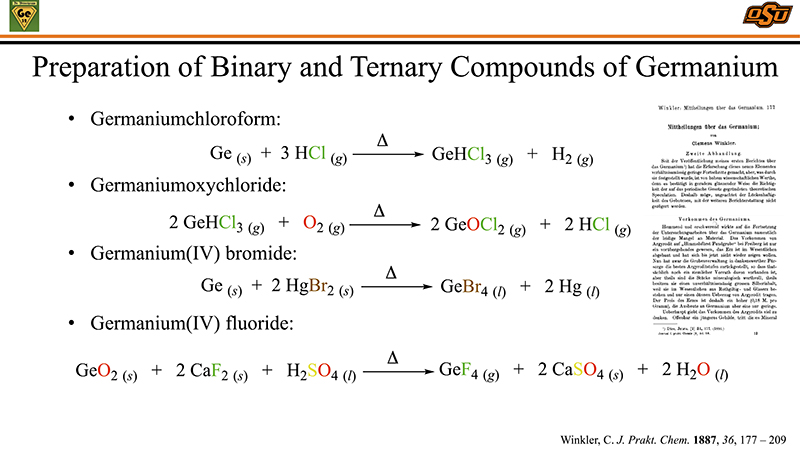
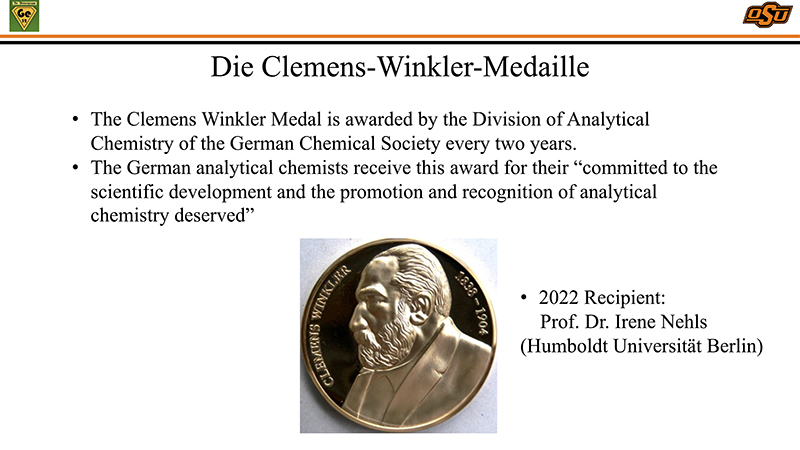
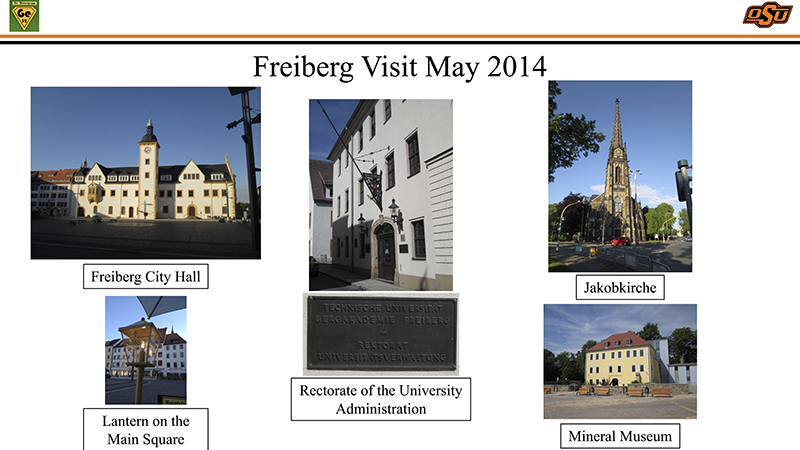
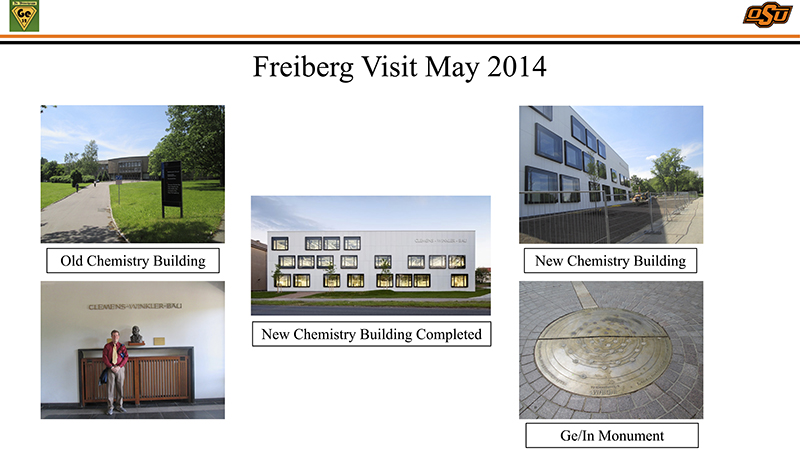
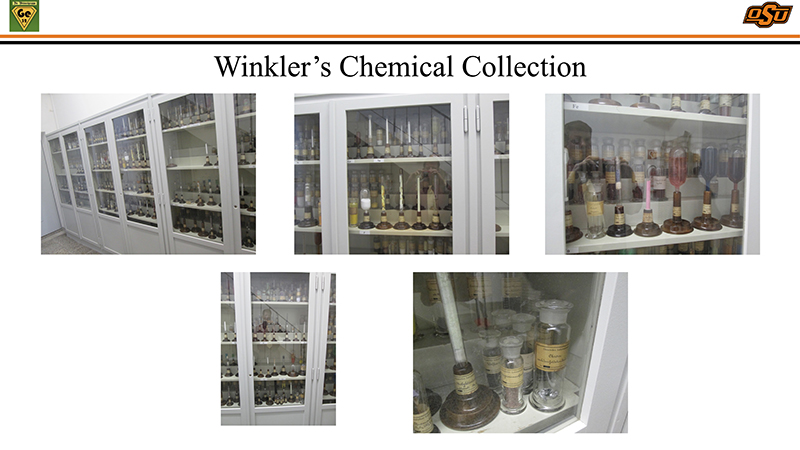
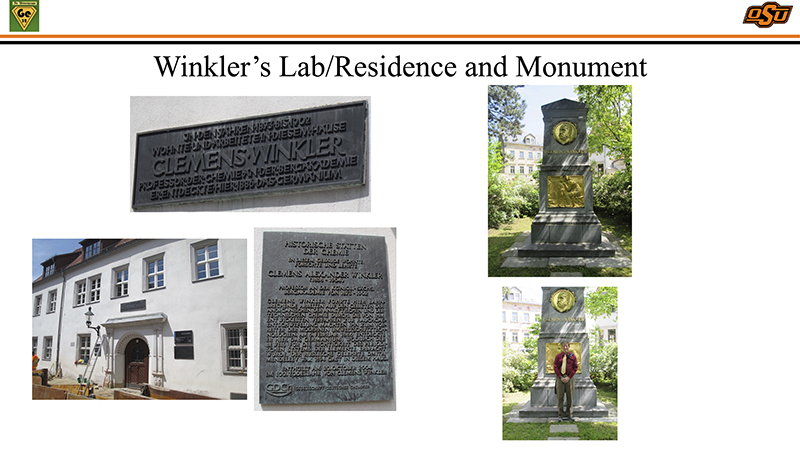
Germanium History
- Details
- Created: Thursday, 04 February 2016 10:29